Kanban and agile: how they relate and what to actually adopt

Someone in the team says the process should be more agile. Someone else says kanban would fix it. A third person points out that the company already tried scrum two years ago and it did not stick. Everyone is arguing about labels, and none of the labels describe the actual problem, which is usually that work is starting faster than it is finishing and nobody can see why.
The comparison in the search box is slightly off, and it is worth fixing before deciding anything. Agile is a set of values about how to build things. Kanban is a method for managing flow. They sit at different levels, so the real question is not kanban versus agile but which concrete method to adopt, and the practical contest is between kanban and scrum.
Why "kanban vs agile" is the wrong axis
Agile came out of a 2001 statement of values written by seventeen people about software development. It says things like working software over comprehensive documentation and responding to change over following a plan. It is deliberately not a process. There is no agile ceremony, no agile board, and no way to install it.
Agile is a direction, not a procedure
Because agile prescribes nothing, "become more agile" is not an instruction anyone can act on tomorrow. What teams actually adopt is a named method that embodies those values: scrum, kanban, extreme programming, or some blend built in house. The value of the agile framing is that it gives a test for whether a method is helping, which is roughly whether the team is getting feedback sooner and can change direction without a formal process.
Kanban is a method, and it predates the software conversation
Kanban started on Toyota's production lines as a system for signalling when to produce more, so that work was pulled by demand rather than pushed by a schedule. Applied to knowledge work it keeps the same core ideas: make the work visible, limit how much is in progress at once, and manage the queues rather than the people. It says nothing about values, team roles, or ceremonies.
So the two are not alternatives
A team can run kanban in a way that is thoroughly agile, and a team can run kanban as a status wall for a manager, which is not agile at all. Choosing kanban does not decide anything about values, and choosing to be agile does not decide anything about how Monday works.
The comparison that actually matters: kanban and scrum
Scrum is the most widely adopted agile method, and it is the thing most people mean when they say agile in practice. Comparing it to kanban is a decision a team can act on.
Where they differ
| Kanban | Scrum | |
|---|---|---|
| Unit of planning | Continuous flow, no fixed window | Fixed sprint, commonly one or two weeks |
| Commitment | Work is pulled when capacity frees up | A set of work is committed at sprint start |
| Roles | No prescribed roles | Product owner, scrum master, developers |
| Meetings | None prescribed | Planning, daily, review, retrospective |
| Board at the end of a cycle | Persists | Typically reset each sprint |
| Core control mechanism | Limits on work in progress | The sprint boundary |
| Handles mid cycle change | Naturally, by reordering the queue | Disruptive, change usually waits |
| Main measure | Time from start to finish | Work completed per sprint |
What each one is good at
Scrum is strong when the team needs a rhythm and a forcing function. The sprint boundary creates a regular moment to finish things, show them, and reflect. For teams that drift without structure, that cadence is the point.
Kanban is strong when the incoming work is unpredictable. Support, client services, operations, and small teams doing several kinds of work at once all struggle with a two week commitment, because the commitment is broken by week one. Kanban gives control through limits rather than through a window of time, so an urgent item reorders the queue instead of breaking a plan.
The honest weakness of each
Scrum's weakness is overhead. Four recurring meetings and three roles is a lot for a team of four people, and teams that adopt the ceremonies without the intent end up with the cost and none of the benefit.
Kanban's weakness is that it is easy to adopt in name only. Putting cards on a board is fifteen minutes of work and changes nothing. The part that produces the improvement, limiting work in progress, is the part teams skip because it feels like it slows them down at first.
How to tell which one fits the team
Rather than arguing from preference, three questions usually settle it.
How much of the week arrives unplanned
Track it for two weeks. If more than roughly a third of what the team works on was not known on Monday, a sprint commitment is going to be broken every time, and the team will learn to treat the plan as fiction. That points to kanban. If most work is known in advance and planned deliberately, sprints will hold.
Does the team finish things or accumulate them
If the problem is that lots of things are half done and nothing ships, that is a work in progress problem, and kanban addresses it directly. If the problem is that the team finishes things but drifts without direction and never stops to reflect, that is a cadence problem, and scrum addresses it directly. Naming which problem the team actually has is most of the decision.
Is anyone outside the team waiting on an answer
If clients, other departments, or a leadership team regularly ask when something will be ready, the method has to produce an answer they can use. Scrum produces one naturally, because the sprint boundary is a date and the committed list is a scope. Kanban produces one only if the team is tracking how long cards actually take, which most teams starting out are not. That is not a reason to reject kanban, but it does mean a team choosing it should start measuring the time from first working column to done in week one rather than in month six, because without that number every external question turns into a guess.
How many people and how much appetite for process
A team of three that adds three roles and four ceremonies will spend a meaningful fraction of its week on process. Smaller teams generally get more out of kanban plus one regular retrospective than out of full scrum. Larger teams, or teams that coordinate with other teams on a shared rhythm, get more out of a fixed cadence.
The blend most teams end up with
In practice, many teams run a board with columns and WIP limits, hold a short daily check, and keep one regular retrospective, dropping sprint planning and the commitment. This is common enough to have a name, scrumban, and it is not a compromise so much as the sensible result of keeping the parts that pay for themselves. It is a perfectly good destination to aim for directly.
How both methods fail in practice
The failures are predictable, and they look the same regardless of which method is on the label.
The ceremony survives and the purpose does not
A daily stand-up becomes a round of people reciting what they did yesterday to a manager. A retrospective becomes a meeting where the same three complaints are raised and nothing changes. A sprint review becomes a demo nobody outside the team attends. In each case the meeting still happens, so the process looks alive, while the thing it existed to produce has quietly stopped. The test is whether anything changed as a result of the last one. If the answer has been no for a month, either fix it or drop it, because a ceremony that changes nothing still costs the whole team an hour.
The plan becomes a report
This is the most common failure and it applies to both methods. The board or the sprint plan stops being what the team works from and becomes something updated before a meeting so it looks correct. The signal is easy to spot: cards all move on the same afternoon, or the sprint board is untouched for four days and then fully updated an hour before review. Once this happens the artefact is pure overhead, and the real status has moved into chat threads and private notes.
The method gets blamed for a staffing problem
If one person is the only reviewer, the only one who can deploy, or the only one who talks to the client, no method fixes that. Kanban will show the queue forming in front of them and scrum will show the sprint failing for the same reason. Both are doing their job by making it visible. Switching methods at that point produces a different looking board with the same bottleneck in it, which is why teams sometimes cycle through three tools in a year without anything improving.
What adopting either one actually requires from the tool
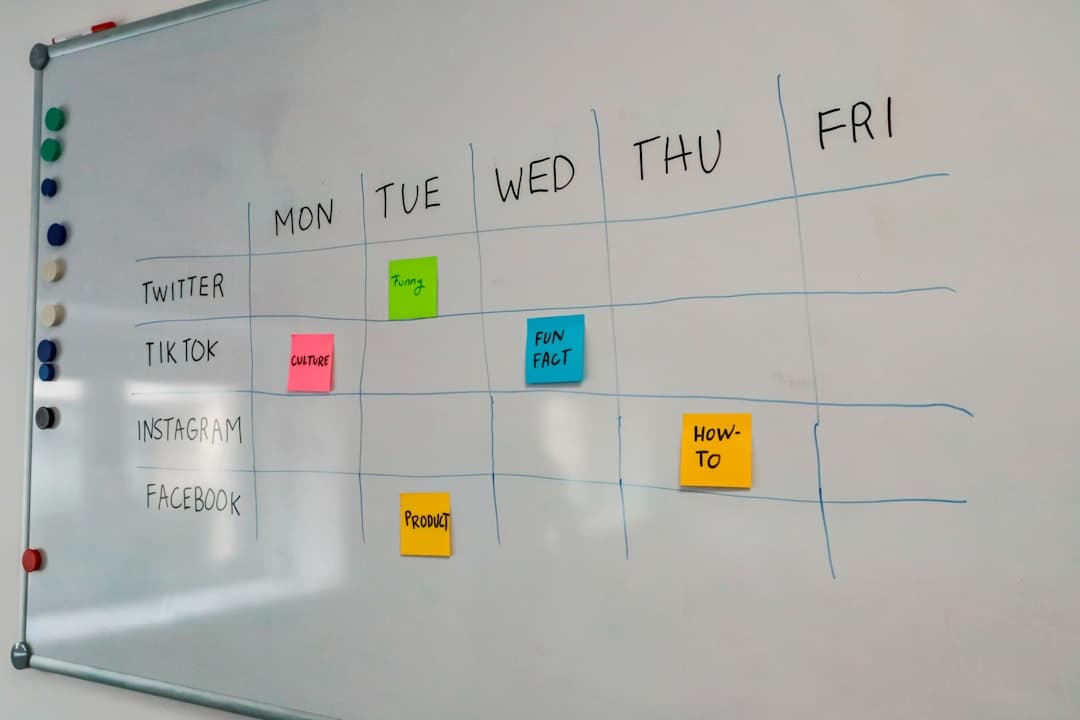
Neither method requires software. Both work on a wall with sticky notes, and for a co-located team of four, a wall is genuinely competitive. Tools matter once people are in different places or the history needs to survive.
What kanban needs
Columns that can be renamed to match the real workflow, a visible count or limit per column, and some way to see how long a card has been sitting where it is. The last one is the most often missing and the most useful, because age is what reveals bottlenecks.
What scrum needs
A way to separate a backlog from the current sprint, something that survives the sprint boundary, and a way to see what was committed against what finished. Tools built around sprints do this natively, and a plain kanban board can be made to do it with an extra column and some discipline.
What both need, and what usually gets forgotten
Both need the conversation to stay near the work. The most common failure in either method is that the board says one thing and the real status lives in a chat thread, because updating the board is a separate trip. Tools that keep chat next to the boards reduce that distance, and it is worth checking how a candidate tool handles it rather than assuming. The features overview is where that question is usually answered for this kind of tool.
Dates still exist either way
Neither kanban nor scrum produces a date for someone outside the team, and both get quietly abandoned the first time a client asks for a schedule and the team has no way to answer. A board that can also be seen as a timeline or calendar solves this without maintaining a second plan in a spreadsheet, and whether those views share the same cards varies a lot between tools. The comparison pages lay out how several handle it.
What to change first
Spend two weeks writing down how much of each week arrived unplanned. If it is more than a third, set up columns that match the real workflow and put a limit on the busiest one, and skip the sprint entirely. If it is less than a third and the team drifts, start with a fixed two week cycle and one retrospective before adding anything else. Either way the board has to be somewhere everyone actually looks, and Pinateca is free for up to 5 people and 10 boards if the current setup is the thing getting in the way.
Q1. Is kanban an agile method?
Kanban is generally treated as one of the agile methods, though it came from manufacturing rather than from software and predates the agile statement. Whether a given team's use of kanban is agile depends on how it is run: a board used to shorten feedback and respond to change fits the values, while a board used only to report status to a manager does not.
Q2. Can a team use kanban and scrum at the same time?
Yes, and many do. The common blend keeps a board with columns and work in progress limits, drops the fixed sprint commitment, and keeps a short daily check plus a regular retrospective. It is often called scrumban, and it tends to suit small teams whose incoming work is too unpredictable to commit two weeks ahead.
Q3. Which is easier to start with, kanban or scrum?
Kanban is easier to start because it does not require new roles, meetings, or estimates: the board maps what the team already does. It is also easier to adopt in name only, since the hard part is limiting work in progress, which teams tend to skip. Scrum asks more up front but makes it more obvious when it is not being followed.
Q4. Does kanban work for teams that are not building software?
Yes. It came from manufacturing and is widely used in support, operations, recruiting, marketing, and client services. Work arriving unpredictably actually suits kanban better than scrum, because there is no fixed commitment to break when something urgent comes in.
Q5. Do WIP limits mean the team has to work on fewer things?
That is exactly what they mean, and it is the point. Limiting how much is in progress at once usually makes individual people look less busy while making the team finish work faster, because less time goes into switching between half finished items and waiting on each other. The first two weeks tend to feel uncomfortable before the effect shows up.