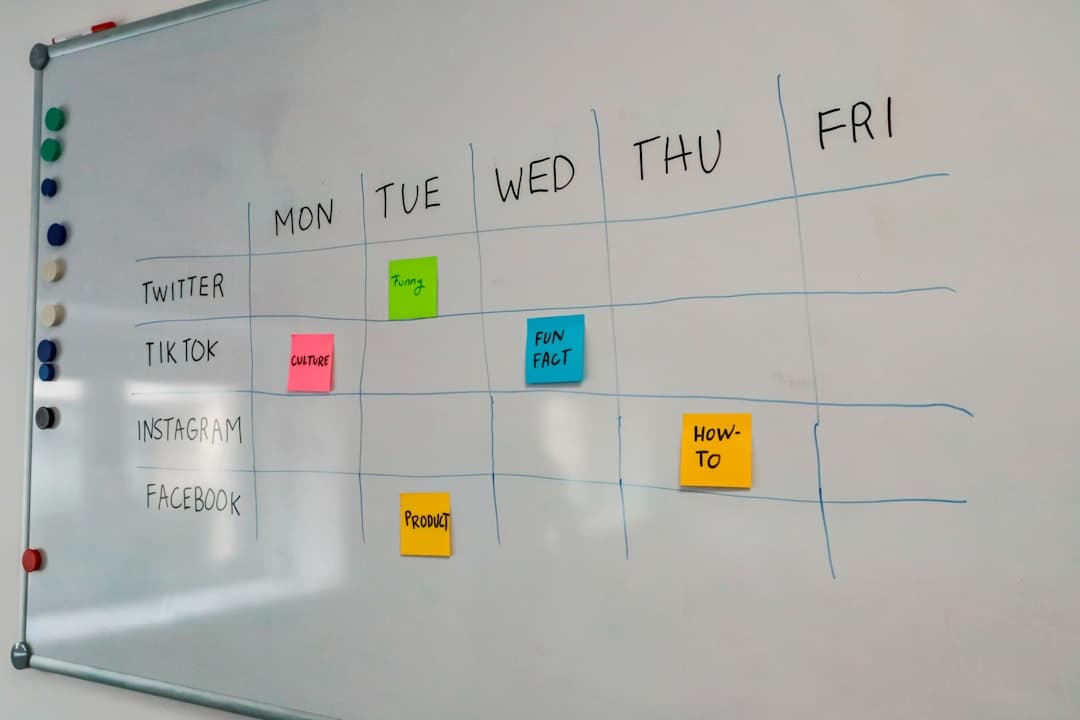
Kanban boards inside Microsoft Teams: the options and their trade-offs

The team already lives in Microsoft Teams. Chat is there, files are there, meetings are there, and the idea of asking everyone to open a separate tool for the project board is met with the expression people reserve for yet another login. So the question becomes what a kanban board inside Teams actually looks like, and whether the built in option is good enough.
The answer has three parts: the Planner app that ships with Microsoft 365, the licence tier that decides what Planner can do, and the option of pinning a different board tool as a tab. Each has a clear shape, and mixing them up is the usual reason a team ends up disappointed a month later.
Planner is the built in answer, under a name that changed
The app in Teams that provides a board is Planner. Microsoft's documentation records that in April 2024 the Tasks by Planner and To Do app was renamed Planner, which is why older guides and screenshots use a different name for the same tab. The admin overview of Planner states that it brings together Microsoft To Do, Planner and Microsoft Project into one experience.
Opened as a personal app, Planner presents three areas. My Day is described as a focus space where tasks due today appear automatically and which clears itself every night. My Tasks gathers private tasks, tasks assigned from anywhere, flagged Outlook mail and an all view with filtering. My Plans lists every plan the person can reach, with filters including recent, shared, personal, pinned and team plans.
The board itself lives in a plan. Tasks sit in buckets, and the board view documentation describes adding tasks to buckets and creating new buckets to get a visual view of the project. A bucket is simply a column, which means the columns are whatever the team decides, not a fixed set of statuses. Grouping can be changed to progress, due date, priority or label without rebuilding anything.
What the licence decides
This is the part that catches teams out, because the board looks the same until someone asks for a Gantt chart.
The admin page states that Planner comes with Microsoft 365 Business Basic, Microsoft 365 Business Standard, Office 365 E1, Office 365 E3, Office 365 E5 and Microsoft 365 A1, and that if the current subscription does not include Planner, the only way to get it is to move to one that does.
With a Microsoft 365 licence, users create what Microsoft calls basic plans, with four views: Grid, Board, Schedule and Charts. The same page states that a Planner Plan 1 licence, renamed from Project Plan 1 in April 2024, is required to create premium plans and to reach the additional views, listed as Timeline, People and Goals.
| Tier | What it creates | Views available |
|---|---|---|
| Microsoft 365 licence that includes Planner | Basic plans | Grid, Board, Schedule, Charts |
| Planner Plan 1, formerly Project Plan 1 | Premium plans | Adds Timeline, People, Goals |
| Planner and Project Plan 3 or Plan 5 | Premium plans with advanced capabilities | Adds reports, Timeline as a Gantt view, dependencies, sprints, custom fields, team workload, goal management |
Two details are worth carrying into any planning discussion. Project Plan 3 and Project Plan 5 were renamed Planner and Project Plan 3 and Planner and Project Plan 5 on 18 September 2024, so purchasing conversations may still use the old names. And the same page notes that premium capabilities are not available in Government Cloud Communities High or Department of Defense tenants, which settles the question early for the organisations that fall under those.
The practical reading: a board with columns, assignees, due dates and labels comes with the licence most organisations already hold. Dependencies, a Gantt view and custom fields do not.
Adding a board to a channel, and what that ties it to
A plan added as a tab in a channel is not just a shortcut. The plan belongs to the team, which means its membership is the team's membership. That has useful and awkward consequences in equal measure.
The useful side is that nobody administers a second list of people. Someone who joins the team gets the board. Someone who leaves loses it. Conversation about a task can happen in the channel next to the board rather than in a separate comment system, and notifications arrive where people already look.
The awkward side appears when the board's audience is not the team's audience. A board for a project involving two people from marketing and one external contractor does not map to a team that contains twenty five. The options are to create another team for three people, which multiplies teams quickly, or to share the plan more narrowly and accept that the board and the conversation now live apart.
External access deserves its own thought. Guests can be added to a team, and the organisation's guest settings decide whether that is even possible. For an agency or a consultancy whose boards routinely include client side people, the answer to whether a client may be added as a guest is an organisational policy question rather than a product question, and it is worth asking before the board is designed around it.
Setting the board up so it reflects the work
Most complaints about the built in board come from a plan that was created in a hurry and never revisited. Four decisions fix the majority of them.
Name the buckets after stages, not after topics
The default buckets invite a team to use them as categories: Marketing, Website, Admin. Categories belong on labels, because a task has one bucket but can carry several labels. Buckets should be the stages work passes through, so that moving a card left to right means something and a card sitting still is visible as a problem.
Agree what progress means
Because progress and bucket are separate, a team has to decide which one is authoritative. The workable convention is that the bucket is the truth and progress is set to completed only when the task leaves the last bucket. Whatever the team picks, it needs saying out loud once, because the two states will otherwise disagree within a fortnight.
Use labels for the questions asked most often
Labels are what the board groups by when someone wants a different cut of the same work. Client name, type of work, or a single label for blocked all earn their place. A blocked label is usually more useful than a blocked bucket, because the card stays in the stage where the work actually is.
Put the checklist inside the card, not in the description
A task with a checklist shows its progress on the board itself. The same steps written as a paragraph in the description are invisible until someone opens the card. For work that repeats, filling the checklist once and copying the task is faster than writing it again, and it keeps the steps consistent between people.
Where the built in board stops
None of these are defects. They are the edges, and a team that knows them in advance makes a better decision.
No work in progress limits. Buckets have no cap and no warning when they fill. The core discipline of kanban, finishing work before starting more, has to be maintained by agreement rather than by the tool.
Buckets are columns, and columns are not status. Progress in a basic plan has three values: not started, in progress and completed. A board arranged into six buckets is therefore carrying two overlapping notions of state. This is workable, and it does confuse newcomers, who mark a task complete while it still sits in the Review bucket.
Dependencies and a Gantt view sit behind a premium licence. For a team whose work is a sequence with real hand offs, this is the deciding factor. The options are to buy the higher tier for the people who need it, keep the schedule somewhere else, or use a tool where the timeline view of the same cards is included.
One board, one team. A person working across five projects sees their own tasks gathered in My Tasks, which helps, but a manager wanting a single board across several plans is not well served without the premium views.
Attachments live in the team's files. That is tidy when the team owns the documents and less tidy when the same document belongs to two projects.
The other route: a board tool as a tab
Most established board tools publish a Teams app, and a board can be pinned as a tab in a channel so that it opens inside Teams rather than in a browser. This is the route teams take when the built in board is close but missing something specific, most often limits, a timeline view of the same cards, or boards whose membership differs from the team's.
Three things decide whether this works in practice.
Whether the admin allows it. Teams app availability is governed by policy, so the first question is whether users can install third party apps at all. Finding this out takes one message and saves a week.
Whether the tab is the real thing. Some apps embed the full board, and some show a cut down view that sends people to a browser for anything real. The tab is worth testing with the actual work before committing.
Whether notifications arrive in Teams. A board that is technically inside Teams but posts nothing into a channel leaves people checking two places. Support for posting card activity into a channel is the feature to look for, and the integrations page is where that kind of connection is usually listed.
For teams weighing the built in board against an outside one, the honest comparison is feature by feature rather than a verdict. The features page lists what one such tool includes without a tier change, and the comparison pages set out the differences between the common options.
Choosing between the two routes
Stay with Planner when the board's members are the team's members, when columns, assignees, dates and labels cover the work, and when nobody is asking for a schedule with dependencies. The cost is zero on top of a licence the organisation already holds, and the administration is nil.
Look outside Planner when the schedule matters as much as the board, when boards need their own membership including people outside the organisation, when work in progress limits are part of how the team works, or when the price of upgrading several people to a premium tier exceeds the price of a tool that includes those views for everyone.
What to change first
Find out which licence the organisation actually holds before designing anything, because that single fact decides whether a timeline view is available. Then rename the buckets to match the real stages of the work rather than leaving the defaults, and agree what progress means so it stops contradicting the column. If the gaps that remain are limits, per board membership or a Gantt view of the same cards, Pinateca includes those and is free for up to five people and ten boards.
Q1. What happened to the Tasks by Planner and To Do app?
Microsoft's admin documentation records that it was renamed Planner in April 2024 and given the new Planner experience, which combines to do lists, plans and projects. Guides written before that date describe the same tab under the old name.
Q2. Does a Teams kanban board cost anything extra?
Not for a basic plan. Planner is listed as coming with Microsoft 365 Business Basic, Business Standard, Office 365 E1, E3 and E5, and Microsoft 365 A1. Premium plans, and the Timeline, People and Goals views, require a Planner Plan 1 licence or higher.
Q3. Can a board have work in progress limits in Planner?
No. Buckets hold any number of tasks, and nothing warns when one grows. A team that relies on limits keeps them by agreement, or writes the number into the bucket name as a visible reminder.
Q4. Can a client outside the organisation see one board?
Only by being added as a guest to the team that owns the plan, and only if the organisation's guest settings allow it. Because the plan's membership follows the team's membership, giving access to one board without the rest of the team's material usually means creating a team for that purpose.
Q5. Is a plan in a channel the same as a plan created in the Planner app?
It is the same plan seen in two places. A plan added as a tab belongs to the team, and it also appears in the My Plans list of everyone who can reach it. Deleting the tab does not delete the plan, which surprises people more often than it should.