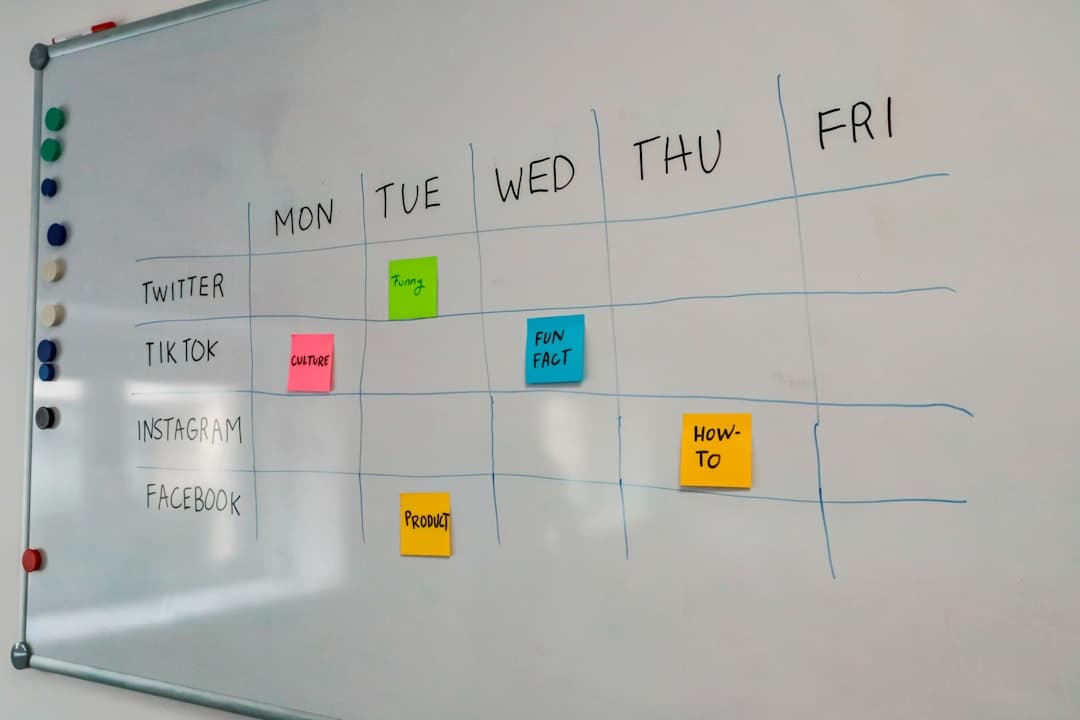
Microsoft Planner as a kanban board: what it handles and what it leaves out

If the company runs on Microsoft 365, a kanban board is already sitting there. Planner is in the Teams sidebar, a plan can be added as a channel tab in under a minute, and nobody has to file a purchase request. For a team that just wants columns and cards, that is a strong starting position.
The question worth answering before the whole team moves in is narrower than "is Planner any good". It is: which of the things you expect from a board are in the version you already have, which are behind a separate licence, and which are not there at all. Microsoft documents all three clearly, and the answers change the calculation.
What a Planner board actually is
A plan in Planner is a set of tasks attached to a Microsoft 365 Group. Creating a plan creates or reuses that group, which also brings a shared mailbox, a SharePoint site and, usually, a team in Teams. Membership of the board is membership of the group. That is convenient when the board maps to an existing team and awkward when it does not.
Columns are called buckets. Cards carry an assignee, a due date, a start date, labels, a checklist, attachments and comments. Comments are not stored with the task: in basic plans they are stored in Exchange as email threads on the group mailbox, which is why discussion on a card can arrive in Outlook.
Basic Planner, the version included with Microsoft 365, offers grid view, board view, charts view, schedule view and an Outlook calendar view. Board view is the kanban layout, grouped by bucket, assignee, progress, due date or label.
The documented limits
Microsoft publishes the ceilings for basic plans, and a few of them matter in daily use rather than at scale:
| Limit | Value |
|---|---|
| Active tasks in a plan | 3,000 |
| Total tasks in a plan | 9,000 |
| Buckets in a plan | 200 |
| Plans owned by a group or user | 400 |
| Assignees on a task | 20 |
| Checklist items on a task | 20 |
| Users receiving real-time updates for a plan | 100 |
The checklist ceiling of 20 items is the one teams hit first. A task that represents a launch checklist or an onboarding run book will run past it, and the workaround is splitting one task into several, which changes how the board reads.
The line between basic and premium
This is the part that catches people out. Several features that feel like table stakes for project work sit on the premium side, which needs a separate licence.
| Capability | Basic Planner | Premium |
|---|---|---|
| Board, grid and charts views | Yes | Yes |
| Schedule view and Outlook calendar view | Yes | Board, grid, charts only |
| Timeline (Gantt) view | Not available | Yes |
| People view | Not available | Yes |
| Dependencies between tasks | Not available | Yes |
| Backlogs and sprints | Not available | Yes |
| Milestones, custom fields, conditional colouring | Not available | Yes |
| Critical path | Not available | Yes |
| Goals, custom calendars, task history | Not available | Yes |
| Recurring tasks | Yes | Not listed |
| Adding plans to Loop, SharePoint integration | Yes | Not listed |
| Tasks app on Teams mobile | Yes | Not listed |
| Tasks per plan | 9,000 | 3,000 |
Two things stand out. The first is that dependencies and a timeline view are premium, so the basic board cannot express "this cannot start until that finishes". The second is that the trade is not one directional: recurring tasks, Loop and full Teams mobile support are listed on the basic side, so moving to premium is not a pure upgrade for every team.
What premium costs
Microsoft lists Planner Plan 1 at $10.00 per user per month, paid yearly, and Planner and Project Plan 3 at $30.00 per user per month, paid yearly, on its Planner plans and pricing page.
The licence is per person, not per plan. Microsoft's admin documentation is explicit that users with only a Microsoft 365 licence can keep collaborating on premium plans but cannot use the premium features. So a team of eight where six people need to see and edit a dependency chain is six licences, not one.
Where Planner sits among the other Microsoft task tools
Part of the confusion around Planner is historical. The app in Teams, renamed from Tasks by Planner and To Do in March 2024, is a merger of three products: the simplicity of Microsoft To Do, the shared boards of Planner, and the scheduling engine of Project for the web. What a user sees in the app reflects that history.
My Day collects tasks due today plus anything the user pins there. My Tasks splits into private tasks, tasks assigned from Planner, Teams meeting notes and Loop, and emails flagged in Outlook. My Plans lists To Do lists, basic plans and premium plans side by side.
Underneath, these are different services. Private tasks live in Exchange. Basic plans and their tasks are stored in Azure and managed by the Planner service, with attachments in the group's SharePoint site. Premium plans are stored in Dataverse and managed by Project for the web, with a separate scheduling API rather than the Microsoft Graph endpoints that cover basic plans.
That split has practical consequences. Automation written against basic plans, through the Power Automate Planner connector or Graph, does not carry over to premium plans. Compliance and eDiscovery follow different paths depending on where a task lives. And a team that upgrades to premium is not turning on a setting, it is moving its work to a different service with a different data home.
One more detail matters for field teams: Microsoft notes that the Planner app has limited functionality on Teams mobile, where users see only plans that have been added as a tab in a channel. A plan created in the Planner web app and never pinned to a channel is effectively desktop only for those users.
Where the basic board holds up well
For the work it was designed for, basic Planner is solid and costs nothing extra.
Short-lived, flat task lists. An event, an audit, a hiring round, a quarterly campaign: work that is a list of things to do with owners and dates, not a schedule with a shape. Buckets by stage, cards by task, done.
Teams that already live in Teams. The plan appears as a channel tab, notifications arrive where people already are, and nobody signs in anywhere new. Adoption friction is close to zero, which is a real advantage that feature lists tend to undervalue.
Frontline task distribution. Task publishing lets a central team push task lists to many locations and see completion status by location, list and task. For retail, hospitality and field operations, this is a genuinely distinctive capability, not a checkbox.
Charts for a status meeting. The charts view gives progress by bucket, assignee and due status without anyone building a report.
Where it runs out
No dependency between tasks. On the basic board, sequence is something people hold in their heads or write into task titles. When a date slips, nothing downstream moves, and nobody is warned.
No timeline on the basic tier. Schedule view puts tasks on a calendar. It does not draw bars across a span or show a chain, so a plan with phases needs a separate Gantt somewhere else, which then needs maintaining separately.
The board is tied to a group. Because membership follows the Microsoft 365 Group, a board shared with a client, a contractor or another department means adding them to the group or issuing guest accounts in the tenant. For organisations with a tight identity policy, the second step is not a five minute job, and it is the reason a lot of external collaboration ends up in email attachments instead.
Conversation is next to the board, not on it. Teams chat is excellent, but it is a separate surface from the plan, and card comments land in Exchange. A decision made in a channel does not attach itself to the card it changed, so the board can be accurate and still fail to explain itself.
One plan, one team, one tenant. Planner assumes work belongs to an internal group. Agencies, studios and consultancies whose boards are organised per client, with different people on each, spend a lot of effort making that model fit.
Comparing it with a standalone board tool
The useful comparison is not feature count. It is where the cost sits and who can be invited.
| Question | Basic Planner | Premium Planner | A standalone board tool |
|---|---|---|---|
| Extra cost for a Microsoft 365 team | None | $10.00 or $30.00 per user per month, paid yearly | Varies, often free for small teams |
| Gantt and dependencies | No | Yes | Usually yes |
| Chat attached to the board | Teams, separate surface | Teams, separate surface | Varies, present in some |
| People outside the organisation | Guest account in the tenant | Guest account in the tenant | Usually an email invite |
| Works without Microsoft 365 | No | No | Yes |
| Schedule of people and shifts | No | People view | Varies |
Checking a candidate against this shape takes ten minutes. A feature overview and a pricing page answer most of it before anyone signs up for a trial.
Getting the most out of basic Planner
For teams staying on the included version, a few habits keep the board honest.
Use buckets for stage, labels for everything else. Buckets are the columns and there should be four or five. Type of work, client and priority belong on labels, which can be filtered without splitting the board.
Group the board by assignee once a week. Board view can group by assignee rather than bucket. It is the closest basic Planner gets to a workload view, and it makes an uneven distribution obvious in seconds.
Keep checklists under the 20 item ceiling deliberately. If a task needs more, it is more than one task. Splitting it early is better than discovering the limit halfway through writing a run book.
Put the sequence in the due dates. Without dependencies, dates are the only signal of order. Setting a start date as well as a due date on every task at least makes the schedule view readable.
Decide where decisions get recorded. Since chat is a separate surface, agree that any decision affecting a task gets pasted into that task's comments. Otherwise the board shows state without reason.
Pin every plan to a channel tab. It costs nothing, and it is the difference between a plan that mobile users can open and one they cannot. Do it when the plan is created rather than after someone complains.
Archive by moving tasks to a completed bucket, not by leaving them. The 3,000 active task ceiling counts tasks that are not complete, so a board that accumulates stale open tasks moves toward the limit even when the real work is small. A monthly pass that closes or deletes dead tasks keeps the count honest and the board readable.
What to change first
Take last quarter's plan and mark every task that could not start until another finished. If there are only a handful, stay on basic Planner and put the sequence in start dates. If there are many, price premium licences for everyone who needs to see that chain and compare the yearly total against a standalone board with dependencies included, such as Pinateca, before committing.
Q1. Is Microsoft Planner free?
Basic Planner is included with Microsoft 365 at no additional cost. The premium capabilities need a separate licence, listed by Microsoft at $10.00 per user per month for Planner Plan 1 and $30.00 per user per month for Planner and Project Plan 3, both paid yearly.
Q2. Does Microsoft Planner support task dependencies?
Not in the basic version included with Microsoft 365. Dependencies, along with timeline (Gantt) view, milestones, custom fields and critical path, are premium features that require a Planner Plan 1, Project Plan 3 or Project Plan 5 licence.
Q3. How many tasks can a Planner board hold?
A basic plan supports up to 3,000 active tasks and 9,000 tasks in total, with a maximum of 200 buckets. Premium plans are listed at 3,000 tasks per plan. Individual tasks are limited to 20 assignees and 20 checklist items.
Q4. Can people outside the company be added to a Planner board?
Only by giving them access to the underlying Microsoft 365 Group, which in practice means a guest account in the tenant. That is workable for a long-running partner and heavy-handed for a client who needs to look at one board for three weeks.
Q5. Is Planner a good fit for agencies working across many clients?
It can work, but the model pushes against it. Each plan is bound to a group, and different clients usually mean different member lists plus external access, so the administrative overhead grows with the number of clients rather than the amount of work.